Season 8

Season 8 is in full swing! Discover the 10 finalist teams and their projects for the Make IT Agri competition.
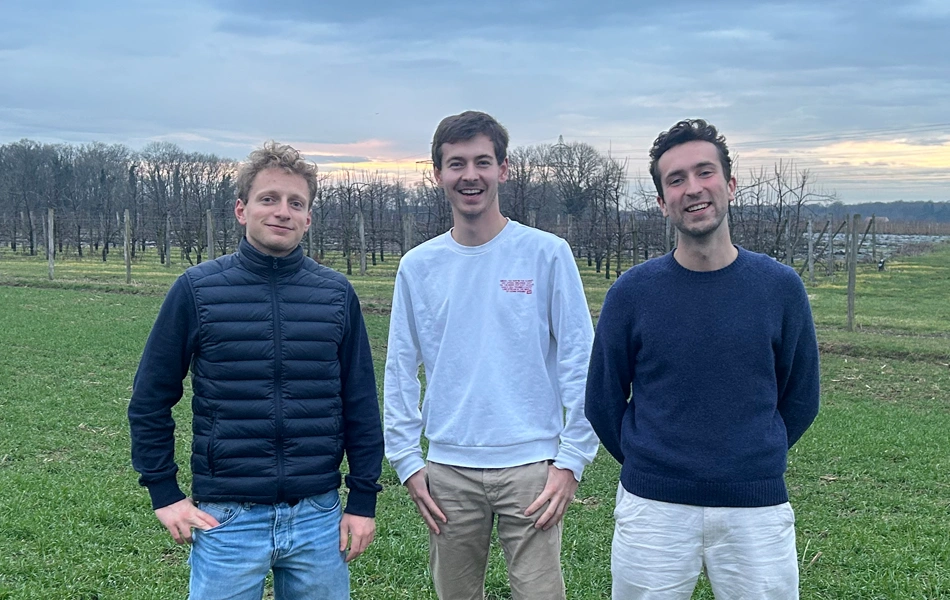
Although essential to the field crop sector, nitrogen fertilizers currently pose a triple challenge for French and European agriculture: cost, dependence on imports, and carbon footprint. What if farmers produced their own nitrogen fertilizer? Our project develops local units, coupled with methanization, to manufacture a low-carbon, economical, and sovereign fertilizer, as close as possible to the farms.
The team: Marc Florent Touati, Joseph De Solages, Hugo Grollemund and Simon Delles from AgroParisTech and HEC.
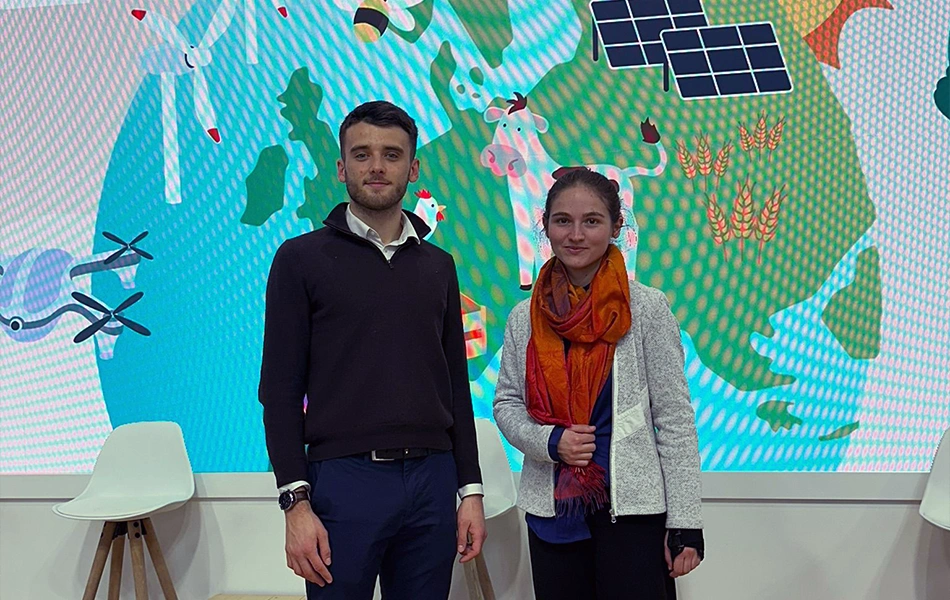
BeeD’ici is developing an automated picking machine for royal jelly production. In France, 95% of royal jelly is imported from China (275 tons vs. 3 tons produced locally), where labor is cheaper. Our solution automates the transfer of larvae, reducing physical strain and working hours. Robust and simple, it aims to help reshore production, supported by specialized control software and dedicated guidance.
The team: Annaelle Delamarche and Arthur De Macédo from Polytech Nice Sophia.
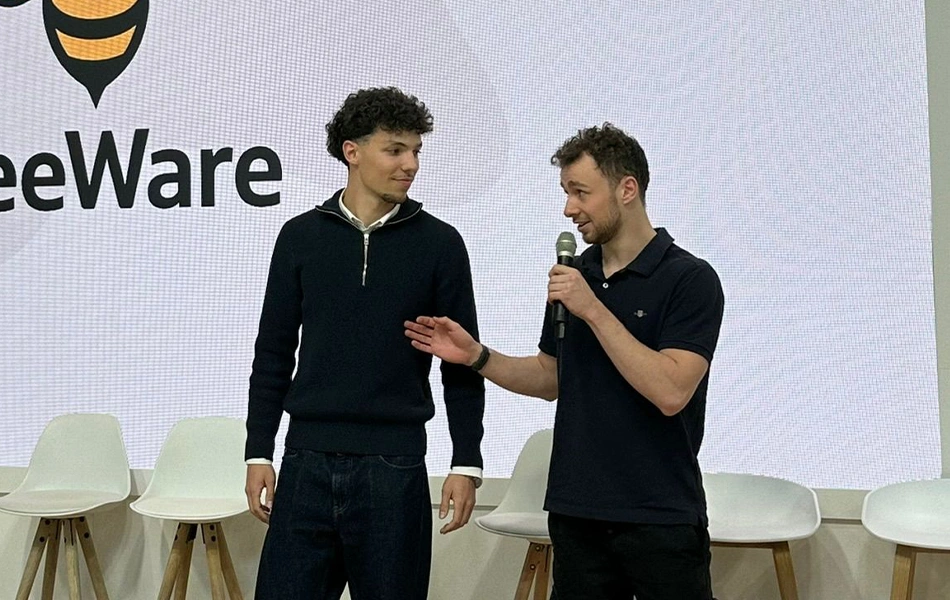
BeeWare is an autonomous system featuring a drone capable of tracking Asian hornets in flight to precisely locate their nests without human intervention. This innovative solution combats an invasive species that poses a serious threat to bees. By facilitating rapid nest detection, BeeWare protects hives, supports beekeepers, and preserves biodiversity while sustainably promoting pollination and colony development.
The team: Martin Henry-Leo and Anthonin Delaune from Polytech Nice Sophia.
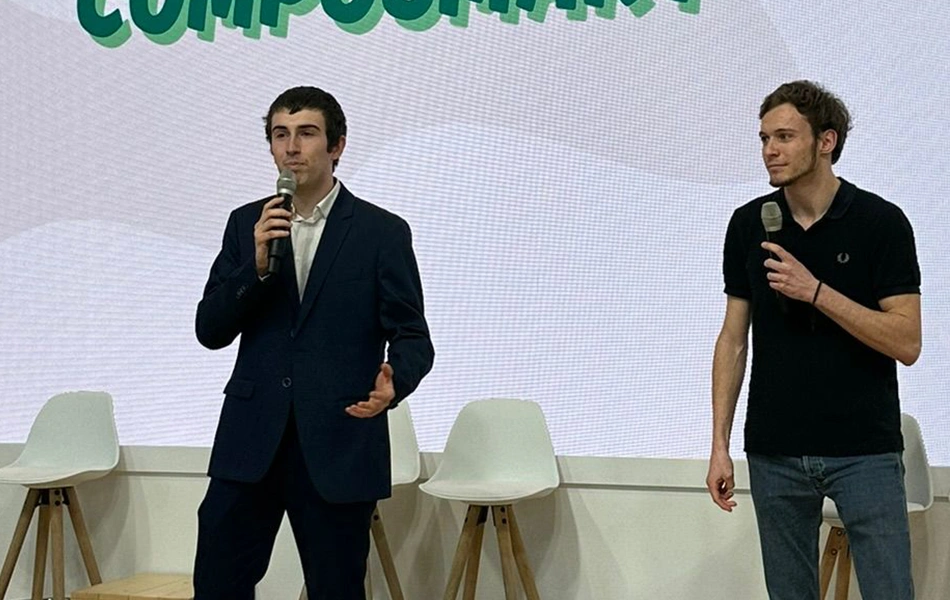
Composmart is the game that teaches you how to sort bio-waste! Its game-based learning platform, combined with simplified course materials, helps educate and train households in bio-waste management in a fun way. Backed by a map of voluntary drop-off points, everything is designed to support families in daily composting practices, regardless of their initial level or experience!
The team: Gabin Alvarez Silva and Scott Fayolle from AgroParisTech.
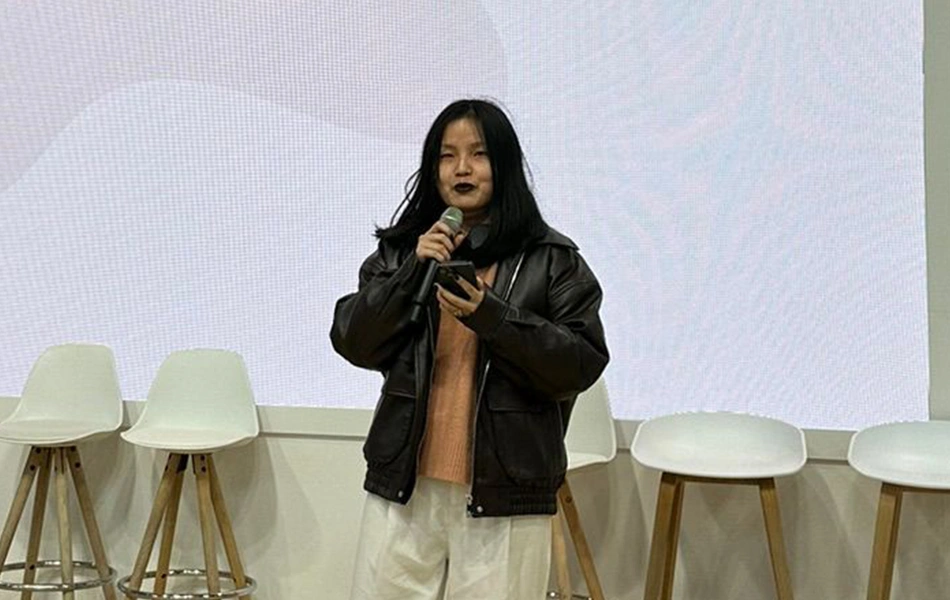
Maïsk is a decision-support tool using historical climate and agronomic data analysis to anticipate extreme risks such as drought or frost. By modeling yield distribution based on sowing dates and variety choices, it allows farmers to compare various scenarios. The goal is to strengthen the economic and environmental resilience of corn crops.
The team: Shane Tao and Anis Slimani from Paris Saclay University.
MIN Express is a B2B web application designed as an operational tool to help organize commercial and logistical flows within National Interest Markets (MIN). Its goal is to streamline exchanges, anticipate volumes, secure transactions, and optimize the preparation of purchases and sales, while preserving the historical functioning of MINs based on human relationships.
The team: Bilell Kadourri and Thomas Llence from Bordeaux Sciences Agro.

This project involves installing equipment in wastewater treatment plants to recover nitrogen from wastewater and transform it into fertilizer for agriculture. The solution integrates into existing infrastructure and bridges water treatment with agricultural production, while creating economic value from a stream currently considered waste.
The team: Henri Méausoone and Edgar Thieffry from Uni Lasalle Beauvais and SKEMA.
PureGrain is an integrated solution for the rapid detection of zearalenone, a mycotoxin found in cereals and classified as an endocrine disruptor. It combines a cell-free biosensor, a portable reader, and a mobile application. In 15 minutes, for about €2 per test, farmers obtain reliable results on-site. The app centralizes analysis history and optimizes batch management.
The team: Makcen Batouche, Vincent Quintas and Samer Nahas from Paris Saclay University.

TerraSync makes agroforestry bankable and profitable. As an online platform starting in France and expanding across Europe, it uses field data to improve the reliability of simulations. It recommends the best tree-crop associations, estimates stored carbon and biodiversity, guides administrative procedures, and assists in securing financing. It also projects long-term income.
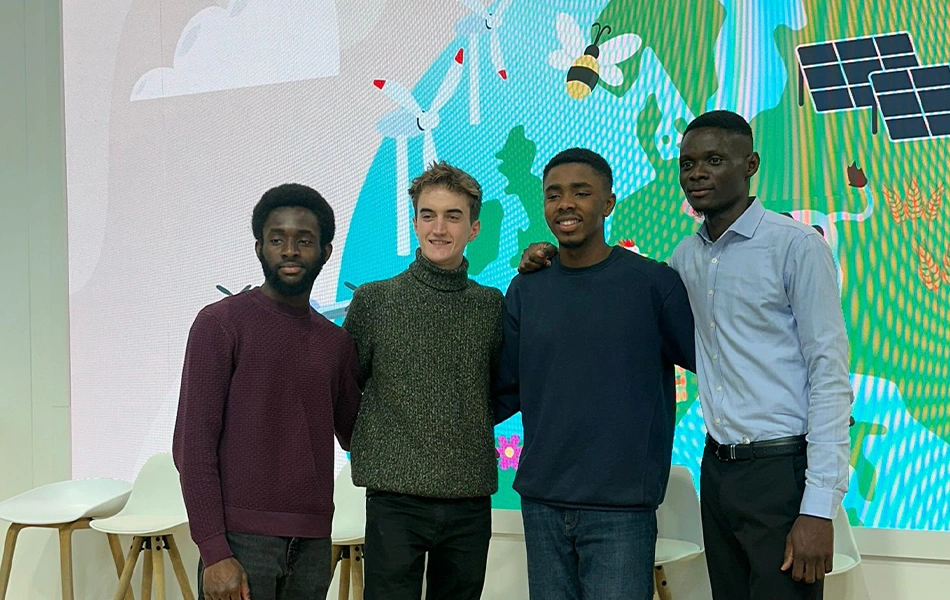
The team: Justice Nii No Yebuah, Joseph Tawiah, Bawa Abdul Rahim Suhuyine, Ankit Tiwari and Louis Dellis from JUNIA ISA Lille.
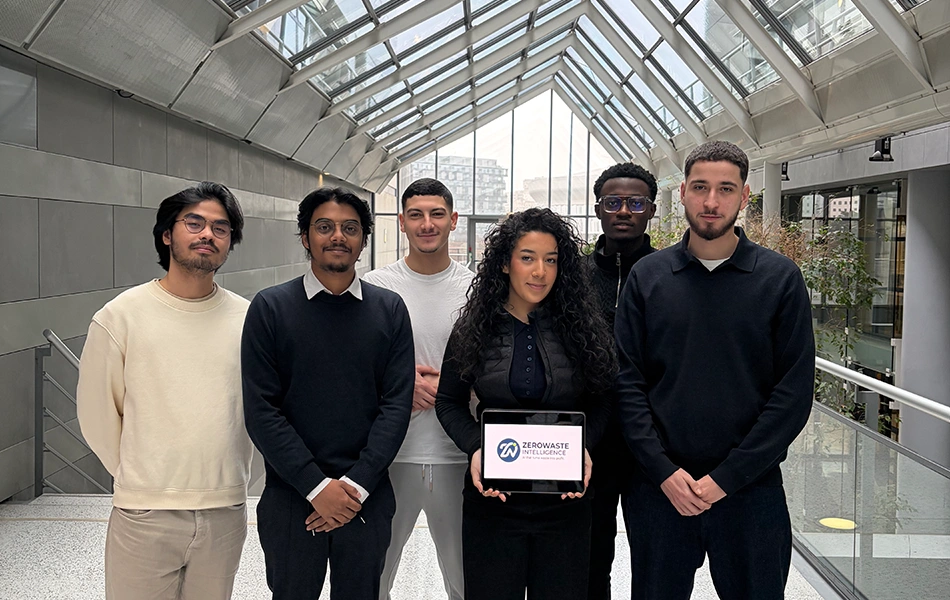
ZeroWaste Intelligence puts AI at the service of sustainable food. By coupling checkout data with exogenous variables (weather, events), this solution predicts exact demand to turn waste into profit. More than a management tool, it is a concrete lever to secure agricultural outlets and finally respect the product, from farm to fork.
The team: Manal Hassan, Rayan Iguercha, Badis Hamouri, Kenth-Ashley Dizon, Raphael Delavictoire and Yvan Sonna from Pôle Léonard de Vinci (ESILV).